
The Zero-Waste Color Run Guide

Schools and municipalities increasingly ask the same question before approving an event: what happens to the waste? A color run is already one of the most environmentally friendly events you can organize, and with a few simple practices, it can become genuinely zero-waste.
Start with the Powder Itself
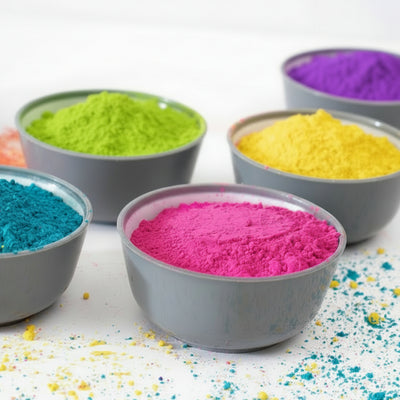
Our color powder is made of cornstarch and food coloring. It disperses naturally with wind and rain, has no notable effect on the environment, and anything you sweep up can go straight to the compost. The foundation of your zero-waste event is already taken care of.
Set Up a Reusables Return Station
The single most effective zero-waste practice: a return bin at the finish line.
- Collect color run glasses in a bin at the end of the event so they can be cleaned and reused at your next edition.
- Do the same for bandanas, buffs or tutus if you lend them out.
- Assign one volunteer to the station; a friendly reminder at the finish line achieves near-complete returns.
Example: a school keeps a single storage box of glasses and accessories. After three annual editions, the box has paid for itself and nothing has gone to landfill.
Rethink Hydration
Water stations generate most of the waste at typical running events. Alternatives:
- Ask participants to bring a reusable bottle, and provide refill stations instead of single-use cups.
- If cups are unavoidable, choose compostable ones and place clearly identified compost bins beside the table.
Distribute Powder Without Packaging Waste
- For group throws, fill reusable cups or small fabric pouches from bulk color powder instead of distributing individual packets.
- If you use packets, place collection recycling bins immediately after the throw zone, empty packets are light and easy to recover when recycling bins are close.
Communicate Your Zero-Waste Plan
Tell participants in advance: bring a bottle, return your glasses, use the bins. Then tell your community afterwards: a short post with photos and a line like "100% of glasses returned, zero bags of garbage produced" builds pride and makes next year's authorization request even easier.
Your Zero-Waste Checklist
- Compostable color powder (cornstarch + food coloring)
- Return bin for glasses and accessories
- Refill stations and reusable bottles
- Bulk powder distribution where possible
- Compost and recycling bins, clearly identified
- Sweep-and-compost plan for the site
A zero-waste color run is not more work, it is mostly better planning. And it is an argument that wins over school boards and municipal councils every time.